
Mastering Online Business Accounting: A Comprehensive Guide
In today’s digital age, effective financial management is crucial for the success of any small business. Online business accounting has emerged as a vital tool for entrepreneurs looking to streamline their financial processes. This guide will explain what online business accounting is, its benefits, essential tools, and best practices to optimize your accounting efforts.
What is Online Business Accounting?
Online business accounting refers to using cloud-based software applications to manage a company’s financial operations. This includes tracking income and expenses, managing invoices, preparing financial statements, and ensuring compliance with tax regulations. Cloud-based platforms allow business owners to access their financial data from anywhere, making it easier to stay on top of their finances.
Benefits of Online Business Accounting
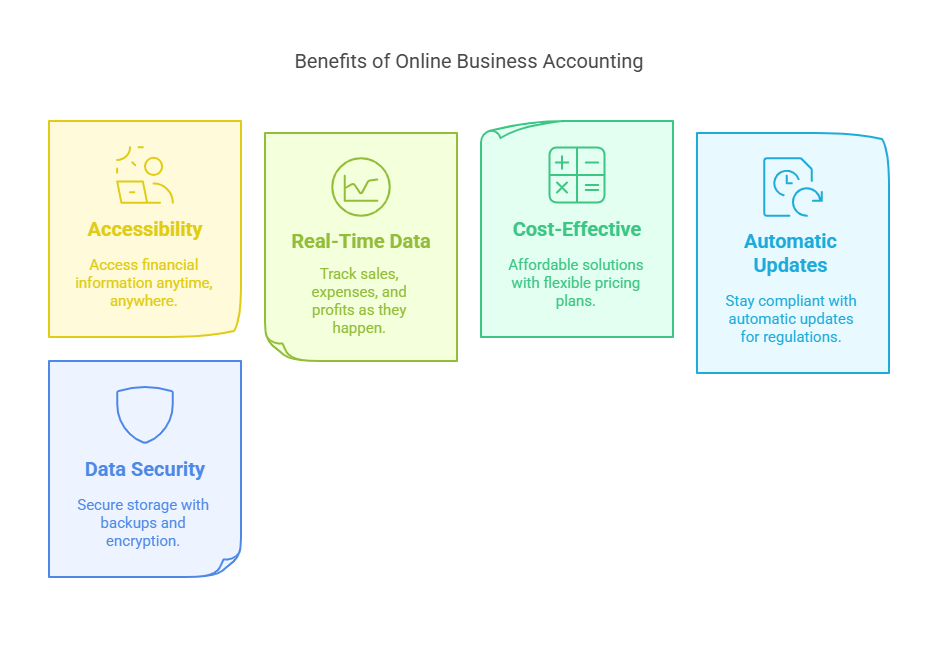
- Accessibility
With online accounting software, you can access your financial information anytime, anywhere. This mobility is especially beneficial for business owners who are frequently on the go.
- Real-Time Data
Online accounting platforms provide real-time financial data, enabling you to make informed decisions promptly. You can track sales, expenses, and profits as they happen, giving you a clearer picture of your financial health.
- Cost-Effective
Many online accounting solutions are affordable and offer flexible pricing plans. You can choose options based on your business size and specific needs, often avoiding the hefty costs associated with traditional accounting methods.
- Automatic Updates
Cloud-based accounting solutions typically offer automatic updates for tax codes and regulations. This ensures that your accounting practices are compliant and reduces the risk of costly penalties.
- Data Security
Reputable online accounting platforms prioritize data security, often providing backups and advanced encryption. Your financial data is stored securely in the cloud, reducing the risks associated with physical file storage.
Essential Online Business Accounting Tools
- QuickBooks Online
QuickBooks is one of the most popular online accounting solutions. It offers a comprehensive suite of financial management tools, including invoicing, expense tracking, payroll, and tax preparation.
- Key Features:
- User-friendly interface
- Integration with various third-party applications
- Automated reporting and financial analysis
- FreshBooks
FreshBooks is an excellent option for freelancers and small business owners. It focuses on invoicing and expense tracking but also provides financial reporting and time-tracking tools.
- Key Features:
- Customizable invoicing templates
- Client management features
- Automatic payment reminders
- Xero
Xero is a cloud-based accounting software popular among small businesses. It offers features such as bank reconciliation, invoicing, and expense tracking.
- Key Features:
- User-friendly dashboard with real-time financial data
- Integration with over 1,000 apps
- Strong mobile app for managing finances on the go
- Wave
Wave is a free online accounting solution ideal for small businesses and freelancers. It offers essential features like invoicing, expense tracking, and basic accounting reports.
- Key Features:
- No monthly fees for basic features
- User-friendly interface
- Ability to accept online payments
- Zoho Books
Zoho Books is part of the Zoho suite of business applications. It provides comprehensive accounting features, including invoicing, expense tracking, and project management.
- Key Features:
- Automation of recurring invoices and payment reminders
- Comprehensive reporting tools
- Integration with other Zoho applications and third-party apps
Best Practices for Online Business Accounting
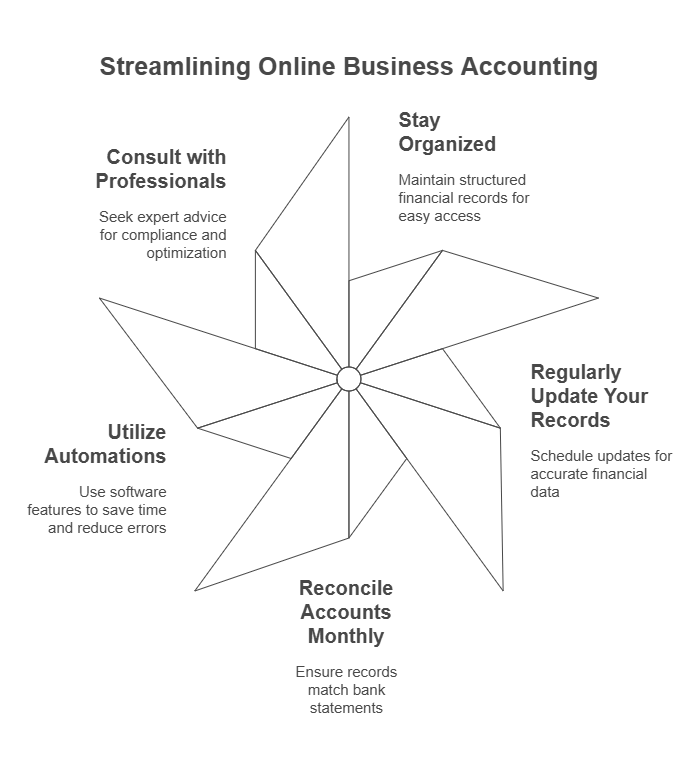
- Stay Organized
Organize your financial records and documents. Use a consistent naming convention and folder structure for easy access to essential information.
- Regularly Update Your Records
Set a schedule to update your accounting records. Regularly entering transactions helps maintain accurate financial data, which is essential for making informed decisions.
- Reconcile Accounts Monthly
Monthly reconciliation of bank and credit card accounts ensures your records match your bank statements. This process helps identify discrepancies early.
- Utilize Automations
Take advantage of automation features in your accounting software. Automated invoicing, payment reminders, and expense tracking can save you time and reduce errors.
- Consult with Professionals
Consider consulting with an accountant or financial advisor, especially during tax season. Professional guidance can help you optimize your accounting practices and ensure compliance with regulations.
Conclusion
Online business accounting is crucial for any entrepreneur or small business owner. By leveraging the right tools and following best practices, you can streamline your financial processes, save time, and gain valuable insights into your business’s financial health. The transition to online accounting can empower you to make informed decisions and focus on growing your business.
Additional Resources
To explore more about online business accounting, check out:
By investing in effective online accounting solutions, you can lay a solid foundation for your business’s financial success.