

The Future of Online Business Automation: Streamlining Success
In today’s fast-paced digital landscape, online business automation has become an essential component for small and large enterprises alike. By automating repetitive tasks and optimizing processes, businesses can save time, reduce errors, and focus on what truly matters: growth and innovation. In this article, we’ll explore what online business automation entails, its benefits, key tools, and how it can transform your operations.
What is Online Business Automation?
Online business automation involves using technology to automate routine business processes and tasks. This can include everything from marketing and sales to customer support and finance. By leveraging automation tools, businesses can enhance operational efficiency, minimize manual effort, and improve accuracy across various functions.
Benefits of Online Business Automation
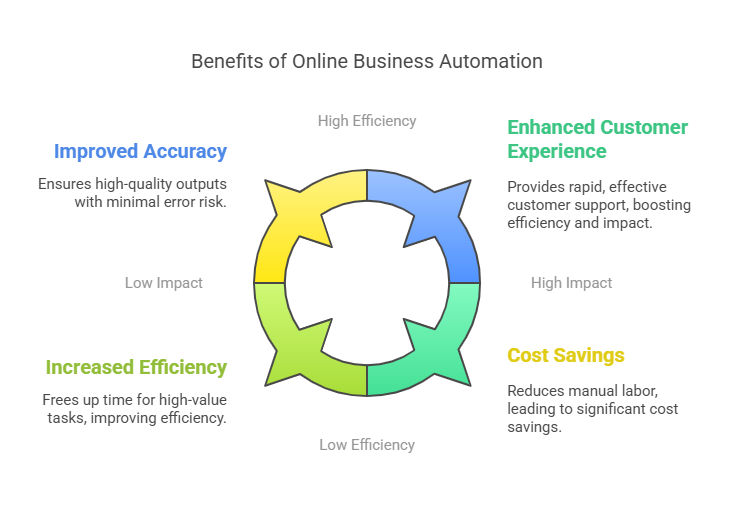
- Increased Efficiency
Automation allows employees to focus on high-value tasks instead of time-consuming routine work. This leads to significant improvements in productivity.
- Cost Savings
By reducing manual labor and the potential for human error, businesses can save money in the long run. Automation can also help streamline workflows, lowering operational costs.
- Improved Accuracy
Automating tasks minimizes the risk of errors associated with manual work. This leads to higher quality outputs and increased reliability in operations.
- Enhanced Customer Experience
With automation, businesses can respond to customer inquiries faster and more effectively. Automated systems can provide 24/7 support, ensuring that customer needs are met promptly.
- Data Insights and Analytics
Automation tools often come with analytics capabilities, allowing you to gather and analyze data more efficiently. This enables informed decision-making based on real-time insights.
Key Areas for Online Business Automation
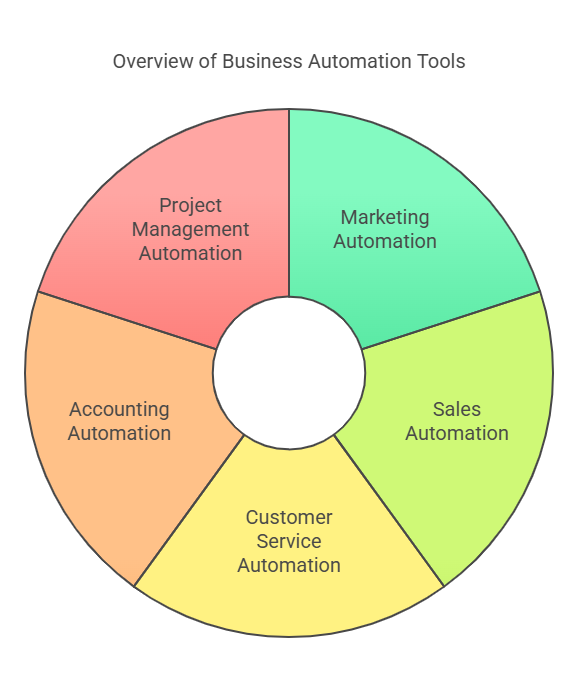
- Marketing Automation
Marketing automation platforms help streamline various marketing tasks such as email campaigns, social media posting, and lead generation.
- Popular Tools:
- Mailchimp: Automates email marketing with segmented lists and personalized campaigns.
- HubSpot: Offers a comprehensive marketing automation suite that includes CRM, email automation, and analytics.
- Sales Automation
Sales automation tools assist with managing leads, tracking interactions, and streamlining the sales process.
- Popular Tools:
- Salesforce: A robust CRM platform that automates sales processes and customer interactions.
- Pipedrive: Focuses on sales pipeline management, helping sales teams automate follow-ups and track deals.
- Customer Service Automation
Automating customer service can improve response times and customer satisfaction.
- Popular Tools:
- Zendesk: Provides a ticketing system and customer support automation features.
- Intercom: Offers chatbots and customer engagement tools for seamless communication.
- Accounting and Financial Automation
Automation in finance helps manage invoices, expense tracking, and financial reporting more efficiently.
- Popular Tools:
- QuickBooks Online: Automates invoicing, expense tracking, and payroll management.
- FreshBooks: A user-friendly tool for small businesses to manage accounting tasks and generate reports.
- Project Management Automation
Project management tools automate task assignments, progress tracking, and reporting, ensuring that teams stay on schedule.
- Popular Tools:
- Asana: Helps automate task workflows and project timelines.
- Trello: Uses boards and cards for easy project visualizations and automated reminders.
Implementing Online Business Automation
- Identify Areas for Automation
Begin by analyzing your existing processes to determine where automation can add the most value. Look for repetitive tasks that are time-consuming and prone to errors.
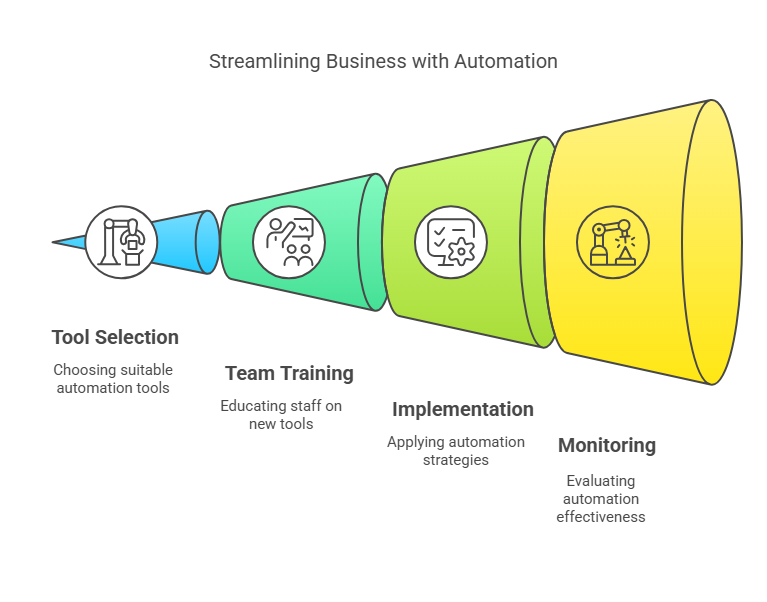
- Choose the Right Tools
Select tools that align with your specific needs. Consider user-friendliness, scalability, and integration capabilities with your existing systems.
- Train Your Team
For automation to be successful, your team must be adequately trained on the new tools and processes. Provide them with the resources and support they need to adapt to automation.
- Monitor and Optimize
After implementation, continuously monitor the effectiveness of your automation efforts. Analyze data and gather feedback to identify areas for further improvement.
Conclusion
Online business automation is not just a trend; it’s a fundamental shift in how businesses operate. By adopting automation tools and strategies, you can streamline your processes, enhance productivity, and ultimately drive growth. In a world where efficiency is key, embracing online business automation will position your business for long-term success.
Additional Resources
To explore more about online business automation, consider checking out:
- HubSpot Automation Tools
- Zapier – For connecting different apps and automating workflows
- Trello Automation – To streamline project management
By integrating effective online business automation strategies into your operations, you can focus on what truly matters: building and expanding your business.